
Here are 2 stories written by 2 different families on opposing sides of the disclosure topic.
Written by a family who chooses to disclose their child’s HIV status:
When my husband and I were considering adopting our daughter, who has HIV, one of the first things that we discussed was the issue of disclosure. Whom would we tell? How would we go about telling people? I had volunteered for five summers at a camp for children with/from families dealing with HIV. I had also worked for two years as a case manager at an AIDS service organization. I had witnessed many, many individuals and families who kept the status of their HIV+ family member secret, and I had watched many individuals and families struggle greatly with the stress of doing so. I met children who lived in fear of accidentally “outing” an HIV+ sibling or parent. I met HIV+ children who lived in terror of their friends finding out their secret and abandoning them. I met parents who felt that they had no one to trust and who carried the burden of their and/or their child’s status alone. My husband and I considered these scenarios carefully, both to determine what we wanted for our child but also what we wanted for ourselves. We felt that living with HIV was not just our child’s issue; it would become a family issue, and it would affect the emotional climate of our family.
What we determined was that we did not want our child to live in fear. We did not want her to fear that her friends and the people in her life only loved a part of her and that they would disappear if they knew all of her. We did not want her to live with a huge secret. We did not want her to wonder what people would think if they knew she had HIV. We wanted our child to be secure in the knowledge that the people in her life loved and accepted her, all of her, exactly as she is that no one in her life is afraid of her. In addition, we didn’t want our younger children to feel that our family lived with a secret that might destroy us if it were found out. We did not want our kids to feel responsible for being the gatekeepers of such a secret. We did not want our children, any of them, to feel isolated and alone with the stress of living with HIV. And finally, neither my husband nor I felt comfortable with the idea of perpetuating the stigma of HIV by living as though it was something that needed to be a secret. We are familiar with the argument that HIV isn’t a secret but that it is personal information that shouldn’t be shared. We asked ourselves whether we would disclose that one of our children had cystic fibrosis or diabetes or any other health issue that would affect our children’s lives and emotions. Our answer was yes, we would, because no one blames children for having these illnesses, and everyone expects that the child and family living with these illnesses needs support. We feel that HIV is the same and that it’s the social stigma of HIV that makes it seem different. My husband and I did not want to have to come up with ways of stretching the truth when necessary. We did not want to have to lie if our child were to become ill and need to be hospitalized. We did not want those in our lives to feel betrayed if/when they found out that we had kept this information from them. We had the feeling that, if we told people that our child had HIV, it might be a big deal, but if we didn’t tell people and then they found out, it would most likely be a HUGE deal. We felt that the backlash from keeping such a secret would most likely be far greater than the reaction to an initial disclosure.
Most of our close friends and family members knew that we were sponsoring an HIV+ child. Disclosing to them consisted mainly of telling them that we would be adopting this child and offering the opportunity to discuss their concerns with us. I wrote up an information sheet about HIV, how it is transmitted (and how it is not transmitted), how it is treated, and the likely prognosis for our daughter. I offered this to our friends and family when we told them of our plans to adopt our daughter. No one took the information sheet, and with very, very few exceptions, everyone was extremely supportive. We presented the information in a straightforward manner and with the expectation that our friends and loved ones were already educated about HIV or would be willing to become educated. We did have some family members who were quite opposed to the idea and concerned that we were putting them, their children, ourselves, and our other children at risk. One family member was concerned about how it would affect her children if our child died. We handled people’s concerns by continuing to provide factual information in a calm manner while communicating clearly that our decision was our decision and that we were committed to adopting our daughter with or without their blessing. Although some family members remained opposed to the adoption to the very end, all of them have ended up welcoming our daughter into the family and none of the threats of ceasing contact with our family have materialized.
We had planned to homeschool our daughter, so we felt that the situation would be fairly well controlled. All the families in our homeschool group were aware of our daughter’s status before she came, and all were supportive. In the end, the best choice for our daughter was to go to school. We have been open with both of the schools she has attended, and the the administration and the teachers have been very supportive. We have presented the information in the context of the whole picture of our daughter and how her life experiences have affected her emotional and educational life. Our daughter has chosen not to disclose to her school friends. She has told me that she doesn’t trust her school friends well enough to disclose to them, and we recently had a very anxiety-inducing situation when our daughter was invited to spend the night with a school friend and was very anxious about her friend discovering her medication and asking about it. Although we talked about various ways of handling the situation and the medication was never discovered or commented on, we felt that this situation gave us a glimpse into what life would be like if we had chosen to keep our daughter’s status a secret, and we remain satisfied with our choice to disclose. Our daughter’s opinion is that although she chooses not to disclose to school friends, she is glad that “everyone else” knows that she has HIV and that they “aren’t afraid” of her.
My husband and I both know that disclosure is an issue that will affect different families in different ways, and we respect that different families will handle it differently. As a guest blogger for Positively Orphaned, I welcome the opportunity to share my family’s journey in the hope that it would be of benefit to other families who are considering this issue.
Written by a family who chooses NOT to disclose their child’s HIV status:
I am a very open person, and have been known to share probably more than is necessary throughout my life. In late 2006 my husband and I made a decision that would ultimately challenge and limit my open nature. Our decision was to adopt another child. This time we were adopting an HIV positive child and there was another layer of research and decision making to be done that reached far beyond the experience we had with our first adoption. One of the most important decisions to make was whether or not to disclose our child’s HIV status.
We started the process being fairly open about the fact that we were adopting an HIV positive child. A few friends, some colleagues at work and our immediate family were informed. Our news was always received with support and interest. We live in a very diverse and socially progressive part of the country and most of the people we interact with are well educated and knowledgeable about HIV/AIDS. We felt comfortable talking about it, and did not meet any ignorance within our closest circles.
Things started to change after we brought our daughter home. We learned that she was completely unaware of her own HIV status and really had no understanding of this disease. We began having regrets about our initial rush to disclose. We realized that we, too hastily, had made an important life decision about a small child that we did not even know. We did not feel confident that our disclosing had even had any impact on reducing the stigma. We simply could not find a compelling reason to disclose anymore.
I began doing some research to gather information about how children, whose status had been exposed by their parents while they were young, were faring as teenagers and adults. There was not much data to gather, and the little I did find was not very encouraging. Most of the adoptive families I have connected with during our process have chosen to disclose, but their children are young, just as mine are. I felt that I did not have insights from young adults on how their parents decision to disclose had affected their self image. We decided that we were not willing to take a risk with our daughter’s self image and her trust in us as her parents.
We spent the next many months getting to know her and falling in love with her. She began immersing herself in her new life and in school. In the summer we spent time with our extended family and unfortunately, it turned out that some of the family members who initially were understanding about her status were now treating her differently than they treated our other kids. It was subtle, but our daughter noticed it. I noticed it. It broke my heart. My relatives had a new baby and would not allow our daughter to touch her. The parents guarded over their baby and refused to interact with my daughter. It was shocking to me and once again I regretted ever having disclosed her status. We had spent countless hours educating this family about HIV prior to them meeting her. They even expressed quite a bit of knowledge about the disease themselves. Even with knowledge of the facts about HIV and stigma, the fear still abounds. Seeing the hurt and confused look on her little face that day made me vow to myself that I never again would use my daughter to educate others about HIV. This is not my job. If anyone asks me if my daughter is HIV positive, I answer honestly by saying that she is healthy- because she is.
My daughter is only 7 years old and going through an immense transition right now. Together with our Pediatric Infectious Disease doctor we are still in the early stages of explaining HIV to her. This is our priority right now. Informing those around us of her status is not important. They are not at risk, and I take comfort in knowing that the law is on our side. When she is a teenager and an adult I want her to look back on this time knowing that we focused on building her self confidence and empowering her to make strong decisions about her own life. That we protected her privacy, just as we protected her sibling’s and our own privacy. That we would not let her be known by her status and that the decision to disclose would be fully hers to make. I am not HIV positive and I do not presume to know what it is like to live with this disease. I can only try to guide her to a place where she can find the strength and the courage to be comfortable in her own body- with this disease. When she is mature enough to understand the medical and social aspects of this illness and is able to make an informed opinion about disclosure, it will be with the support of her parents.
We also do not regard our daughters HIV status as a secret, just as we do not regard our other child’s ADD status a secret. This is just private information. Should someone find out about anything private in our family we will certainly use that opportunity to educate. If one of our children tells someone about a sibling’s status, we will use that opportunity to teach our children about respecting other people’s privacy. We will not make a big deal out of it.
I have found that joining the effort to fight HIV stigma without disclosing my child’s status is not difficult. I have been involved in various efforts to remove the HIV immigration ban, I have met with policy makers as well as with HIV positive people in our community. I am in the process of starting a non-profit and with this will continue to do whatever I can to raise HIV awareness and fight discrimination. Perhaps one day my daughter will join me, but I will let it be entirely up to her.

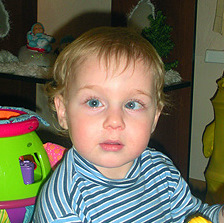 This adorable 2 year old boy is active, curious and affectionate. He is enthusiastic about games and entertainment. He enjoys babbling and uses single words. His vocabulary is rapidly expanding and he understands almost everything. He walks, can partially undress with a little help from an adult and can eat and drink by himself. He was born March 2009.
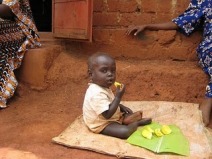 This is Edward Segawa. He is 2 years old. His father has abandoned the family. His mother is HIV+ and Edward is positive as well. Your sponsorship would mean that Edward and his mother could receive ARVs and the other medical treatment they need to survive. It would also provide them with better food to speed their recovery. It is clear from his distended belly and light hair that Edward is suffering from malnutrition. Sponsors are crucial for families such as this to avoid this little boy from becoming orphaned.
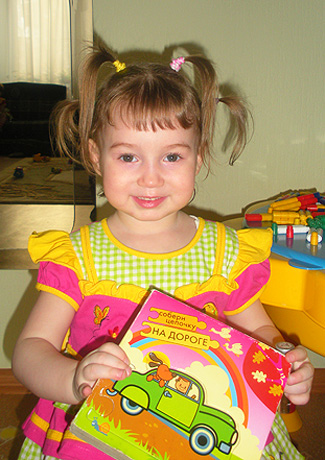 This beautiful little 3 year old girl was born December 2007. She is a cheerful toddler described as being inquisitive and active. She focuses on her activities for long stretches of time and plays with concentration and interest. She says words and sentences and has learned some rhymes. She loves doing puzzles. One of her favorite games is “Mothers and Daughters” sometimes pretending she is the mother and sometimes pretending she has a mother. She also likes to pay “Barbershop” and she styles the hair of all the dolls. She is active and she runs, jumps and steps over obstacles. She eats carefully, enjoys using her utensils and napkin, brushes her teeth, looks after her own appearance and dresses herself although she cannot yet fasten buttons.
 Positively Orphaned