Attention Canadian Families

Russian Adoption

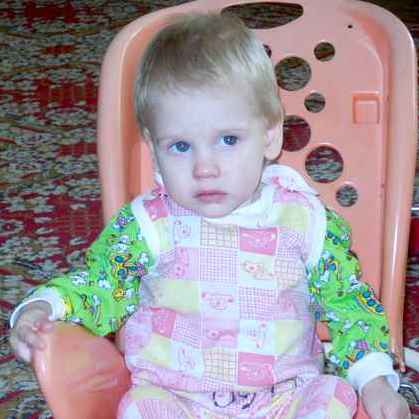
This little boy is available for international adoption to families in Canada. His date of birth is January 1, 2008. A New Year Baby! He has a confirmed HIV positive diagnosis. He is cheerful. He can feed himself. He loves to play with children and toys. Contact me for more info.

Waiting Child in Russia for Canadian Family

Preventing Mother to Child Transmission of HIV/AIDS

The Kaiser Family Foundation is reporting live from the XVIII International AIDS Conference in Vienna Austria, which is going on now. Below is a video. After an introduction, Bill Gates starts speaking about ‘Building on Success: A Roadmap for HIV Prevention’ at 8:00 minutes.

During his presentation, he speaks about preventing mother to child transmission saying that ‘we can eliminate pediatric AIDS’. The entire video is 48 minutes long and covers lots of different HIV/AIDS topics, so those who are primarily interested in the section of the video regarding pediatric HIV/AIDS and prevention may want to forward the video to start watching at 38:15. At this point is a Q & A with Elizabeth Glaser Pediatric AIDS Foundation president Chip Lyons and Bill & Melinda Gates Foundation co-chair Bill Gates. The highlight: Lyons asked Gates what we could do to step up our efforts to prevent new pediatric infections, and how we could move closer to eliminating altogether HIV and AIDS in children.

“It’s outrageous that we haven’t done better on [eliminating HIV and AIDS in children],” Gates answered. “We need to get countries to set aggressive goals. We need to get the political leaders to recognize the tragedy that this is.”

He added that he was “horrified” that only 45 percent of women currently had access to PMTCT services.

“In terms of cost of the intervention, the impact on the lives involved, that should be something that we have above 90 percent. This is one where, even in the next year, I’d like to see a big change.”

He expressed optimism that this goal was entirely reachable, and acknowledged Elizabeth Glaser Pediatric AIDS Foundation’s pivotal role in making this happen.

A Breakthrough in HIV Vaccine Research

HIV Vaccine Research Developments
This image shows the antibody VRCO1, pictured in blue and green, binding to HIV, colored gray and red.

Los Angeles Times Article

A pair of naturally occurring antibodies are able to kill more than 90% of all strains of HIV, researchers say. The finding could lead to the development of new treatments and a possible vaccine.

An effective vaccine against the AIDS virus may have moved one step closer to reality, researchers said Thursday.

Federal researchers have identified a pair of naturally occurring antibodies that are able to kill more than 90% of all strains of the AIDS virus, a finding they say could lead to the development of new treatments for HIV infections and to the production of the first successful vaccine against the virus.

HIV, the virus that causes AIDS, is notoriously mutable, changing the composition of proteins on its surface with ease to escape pressure from the immune system. This enables it to continue infecting cells even after the appearance of antibodies targeting it — and to avoid the relatively ineffective vaccines developed so far.

Hundreds of variants of the virus are now in circulation around the world, and the identification of so-called broadly neutralizing antibodies that can block the bulk of them has been the holy grail of HIV researchers.

To date, however, the best antibodies — immune system proteins that fight infections — that researchers have found block only 30% to 40% of all HIV strains. The identification of antibodies that can block more than 90% of strains could lead to what some researchers are dubbing a renaissance in AIDS prevention and treatment.

The key to the new antibodies is that they bind to a site on the virus surface that rarely mutates.

“I am more optimistic about an AIDS vaccine at this point in time than I have been probably in the last 10 years,” Dr. Gary Nabel of the National Institute of Allergy and Infectious Diseases told Reuters. He led the research reported Thursday in the online edition of the journal Science.

Continue Reading…

International Adoption from ESTONIA

International Adoption from Estonia

Estonia is a small country in Eastern Europe on the Baltic Sea, bordered by Russia and Latvia. So far, only a few children with HIV have been adopted from this country. According to Adoption.State.gov and Rainbow Kids:

Age Requirements: Potential adoptive parents must be at least 25 years old. There are no stated upper age limits.

Marriage Requirements: Single men and single women can adopt. There is no length of marriage requirement for married couples.

The Children: Unrelated children may be adopted at the same time. Children are very well taken care of at the orphanages with good nutrition, stimulating toys and high caregiver to child ratio.

Travel Requirements: One 3-4 day preview trip is recommended and sometimes required. Only one parent needs to travel. Trip length is 7-10 business days.

Timeline: The process from dossier submission to travel to adopt the child averages 4-12 months.

Agency: The agency which has placed children with HIV is Adoption Hope International.

The Yahoo group is AdoptingFromEstonia

Further info from a recent adoptive parent: “Adopting a child with HIV from Estonia was affordable and the travel was easy. The airport is clean and modern and many people speak English. Estonia has one of the highest levels of college graduates in the European Union. The transportation is great and it’s easy to take the bus although taxis are cheap. The preview trip is rarely waived, but it’s only 3-4 days. As soon as court is over, you pick up your child from the orphanage. Our experience with the facilitator in-country was excellent in every way and he helped make our time in Estonia very efficient, comfortable and affordable. He even lent us a phone without charging us. We were very impressed with the level of care the children receive. Our child was in a family type setting with 8 children and 2 caregivers. They also receive good medical care. They are fed well and provided for and they go on field trips and do athletics.”

Amid Recession, Children with HIV Worldwide are in Need of Homes

AIDS Beacon Article

HIV Adoption Article

Although few prospective parents consider adopting a child with HIV, there are many such children in need, and the experience of adopting HIV-positive children can change the lives of all of those involved. With the lifting of the HIV travel ban, bringing HIV-positive children to the United States from other countries has become easier, and there are also HIV-positive children in the U.S. waiting to be adopted.

By the end of this year, an estimated 25 million children around the world will have lost one or both parents to AIDS, including thousands of children in the U.S. At the end of 2008, nearly 2.1 million children were living with HIV worldwide. With the current economic recession, children affected by HIV now need more help than ever.

International Adoption Rates Are Dropping

Although there is little data available on adoption of HIV-positive children, comparisons of overall international adoption numbers suggest rates are dropping.

According to the U.S. Department of State, the number of international adoptions into the U.S. has been decreasing steadily since 2004, with a total of 12,753 adoptions occurring in 2009 compared to a high of 22,990 in 2004.

From 2005 to 2009, the top four countries from which children were adopted were China, Russia, Guatemala, and Ethiopia, three of which have relatively low adult prevalence rates for HIV/AIDS. Ethiopia’s prevalence rate, the highest of the four at 2 percent, is still fairly low compared to many African nations.

In India, recent reports have claimed that adoption centers were unable to find families willing to adopt HIV-positive children, and as a result, no HIV-positive children were adopted in India from 2008 to 2009.

[Click the image above to continue reading]

Waiting Baby Boy in India

The Shepherd’s Crook is looking for a family for a little boy in India who is HIV positive. Please contact the agency directly for the photolisting:

R-09

Birthdate: 1/8/2009

Gender: Male

Special need(s):
HIV positive

Here is an extremely cute 1 ½ year old who has tested positive for HIV.  He was born on January 8, 2009. Despite his diagnosis this beautiful baby boy is healthy and progressing on target in all areas.  This little charmer is full of big smiles and a winsome nature.  He needs a family who understands his condition and is able to provide the health care he needs to lead a full and complete life.